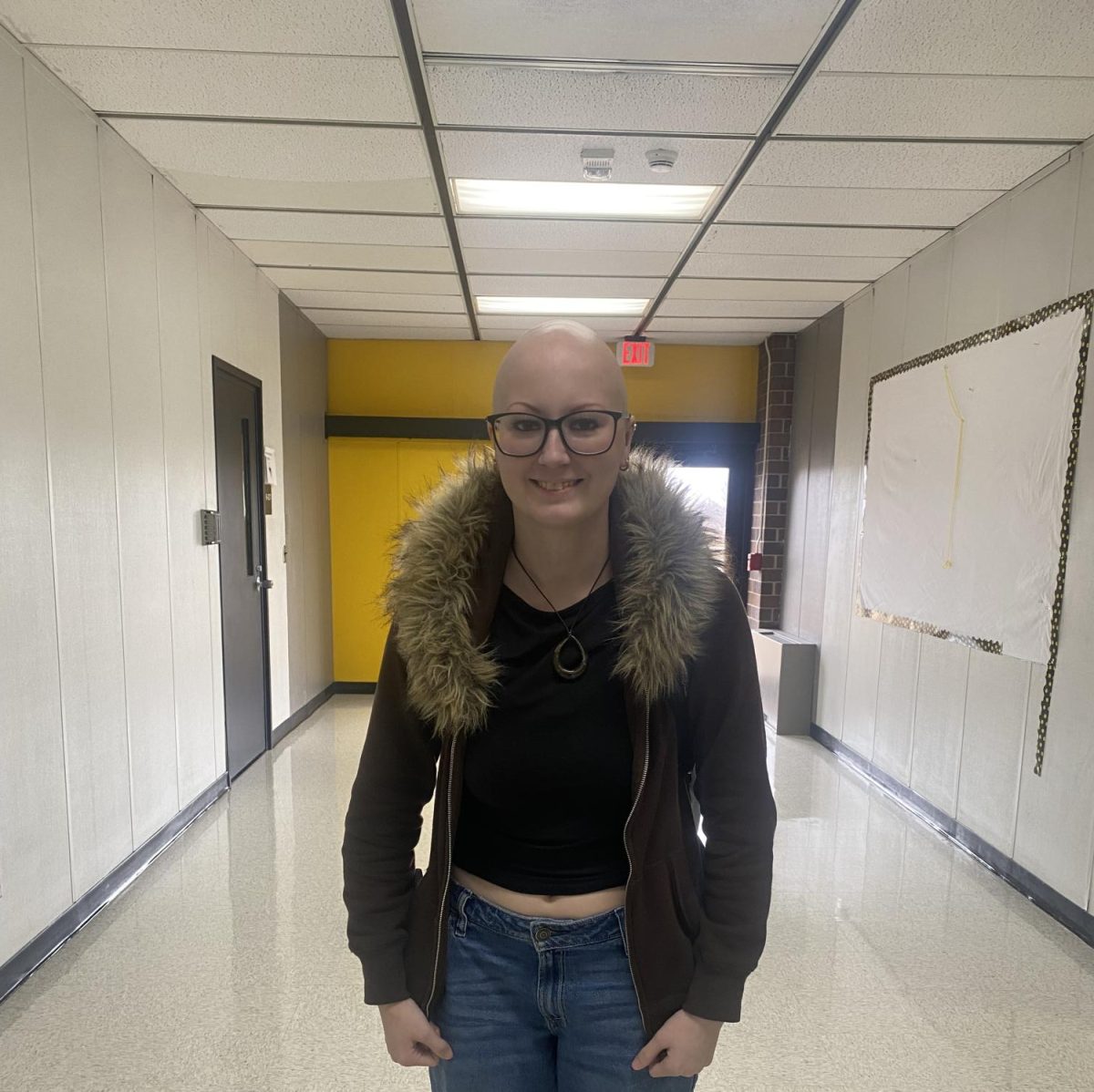
From the age of two, senior Jayla O’Leary has experienced the lows and highs of life with alopecia. Alopecia Areata is an autoimmune disease in which the body mistakenly treats healthy hair follicles as foreign invaders. For O’Leary, growing up with alopecia had its challenges, but it helped her become the person she is today.
“Having alopecia is really who I am,” O’Leary said.
Adapting to social situations such as eating out, shopping, and most of all, school, can be the hardest aspect of life with alopecia.
“[The hardest part as a child] was just feeling like I was different, just sticking out from everyone else,” O’Leary said.
According to the Global Learning Network, “Pediatric patients with AA often face anxiety, depression, and social challenges during key developmental stages due to the visibility of their hair loss.”
“I used to be really insecure, but I’ve gained a lot of confidence, and I’ve really, just really learned to accept myself and [I have] loved who I am,” O’Leary said.
A part of accepting herself includes not wearing wigs. For O’Leary, staying true to herself and ditching wigs is the way she feels the most confident. Along with confidence, O’Leary said being different is just a part of who she is now, and she wouldn’t have it any other way. Even though O’Leary loves being different and individualistic now, it wasn’t always that easy.
“They [Other kids] definitely acted differently toward me growing up,” O’Leary said.
For many children growing up with alopecia, interactions with other children, especially at a very young age, can be a huge obstacle. At elementary ages, most children cannot filter out what is socially acceptable to say and do, particularly when seeing new things or the unusual. These small interactions over time can lead to social anxiety in the future, according to the National Library of Medicine.
“Love yourself and be confident,” O’Leary said.
According to the National Institutes of Health, for other kids, it can lead to confidence in their appearance and pride in who they are. Having self-esteem with alopecia cannot only give other people new perspectives but also help people stand out and redefine beauty standards. Other major positive aspects of alopecia include self-discovery, true friends, new connections, and communities of people who relate.
With experience comes knowledge, and learning to adjust to life with alopecia can be hard. Advice from someone who has already lived with alopecia is something most people recently diagnosed yearn for.
“I would say just embrace it and love yourself,” O’Leary said.
This seemingly simple sentence can be one of the hardest things to do when adjusting to life with alopecia. For most people, adjusting to a new haircut can be a little difficult, so imagine how many feel when they are getting used to life with no hair. With time, learning to love alopecia can become less challenging and have a major positive impact on many lives.
“I really appreciate you guys doing this, thank you,” O’Leary said.